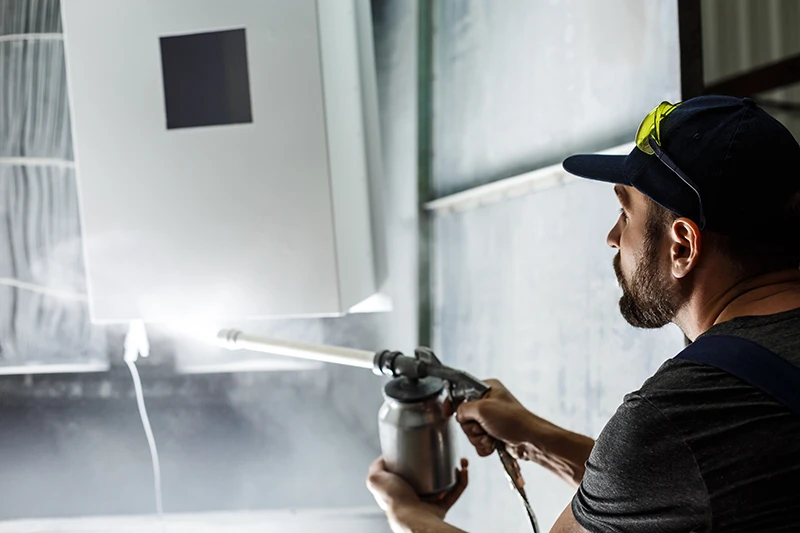

When we hear today about Steam cleaning of air conditioners, It sounds almost like a magic solution: high heat, no chemicals, “disinfects everything,” and that's it. In practice, as with almost everything related to air conditioning systems, the reality is a little more complex.
In this guide, we will clarify: what steam really does to an air conditioner, when it can be part of a smart cleaning process, when it is less suitable, and where exactly the line is between good maintenance and unnecessary experimentation with your system.
What exactly is steam cleaning an air conditioner?
When talking about Steam cleaning of air conditioners, This refers to the use of a device that produces hot steam under pressure, which is used to “wash” dirt and grease from certain parts of the system:
- In some cases, steam is used to clean the more external parts – filters, casing, accessible areas.
- In more professional systems, steam is also used as part of battery cleaning (copper lines/cooling fins) or internal units, with dedicated equipment and a very specific working angle.
It is important to understand that not every “home steam device” is suitable for every part of an air conditioner, and not every air conditioner is “happy” to receive steam under all conditions.
The benefits – where can steam work for you?
When used correctly, steam cleaning an air conditioner can offer several clear advantages:
- Fewer chemicals
Steam works mainly with heated water – without the need for strong cleaning agents. This may be suitable for those who prefer to minimize the use of chemicals in the home, especially in systems through which you breathe air. - Degreasing and grease removal
High heat allows you to release fats and dust that are “stuck” in certain areas, especially when it comes to relatively superficial dirt. In professional systems, this can help clean batteries and heat exchangers without dismantling the entire unit. - Shortening some of the time in the field
When steam is used as part of a structured process, the heat helps to dry the cleaning area more quickly, so it is sometimes possible to return to normal use of the air conditioner more quickly than when using water alone. - Addition instead of replacement
With the right approach, steam is just another “tool in the box”: it can complement mechanical cleaning (brushes, vacuum cleaner) and gentle materials—not replace them.
The disadvantages and problematic aspects – where is steam less suitable?
This is where we see quite a bit of confusion. Steam cleaning an air conditioner is not always suitable for every system, nor for every part:
- Doesn't always go deep
Steam is excellent for removing relatively superficial dirt, but when it comes to deep, complex systems—especially in cases where dust and mold have accumulated over years—it is not always sufficient on its own.
Simply put: if the problem is deep inside the air conditioning ducts or between the battery ribs, steam alone will not necessarily solve it. - Sensitivity of components
Certain parts of the system—such as the internal battery, thin ribs, and delicate connections—may be sensitive to excessive heat or direct steam pressure for short periods of time. Improper use may cause mechanical damage (warping of ribs, damage to delicate parts). - Not a home game on every part
There is a big difference between technicians/cleaning crews who work with specialized equipment, the correct working angle, and knowledge of the system—and using a household steam cleaner that you are ”looking for something to use.” Several professional forums in the HVAC field explicitly emphasize that it is not advisable to “experiment” with steam on internal batteries without experience. - Does not replace cleaning air conditioning ducts
Even if you have cleaned certain parts with steam, this does not mean that the ducts themselves are clean. Dust, debris from renovations, and moisture can remain deep inside the ducts, requiring a completely different process based on industrial vacuum cleaners, negative pressure, and brushes.
Cleaning an air conditioner with steam at home versus steam cleaning as part of a professional process
To understand where the line is drawn, it is important to distinguish between two worlds:
Steam cleaning at home (DIY)
This is usually a small device designed for all kinds of cleaning tasks – floors, bathrooms, windows.
At this point, we usually recommend:
- Do not direct steam directly at internal batteries or into ducts.
- Do not work near electrical connections, panels, or delicate components.
- Yes – if you really want to – use it gently only on external plastic parts, and only according to the manufacturer's instructions for the air conditioner itself.
In other words, steam cleaning an air conditioner at home can be a minor refreshment of the casing—not a treatment of the system itself.
Steam cleaning as part of a professional process
On the professional side, there are dedicated steam systems for air conditioning that operate at appropriate pressures, with an additional extractor, precise working angles, and knowledge of how the system is constructed.
In such cases, steam can help to:
- Clean internal components without wetting the entire environment.
- Incorporate high heat as part of a controlled cleaning and disinfection process.
Even then, it's only part of the process, not the only thing we do.
Where is the line drawn? What is acceptable for steam and what is not?
So after all that, where exactly is the line drawn when it comes to steam cleaning air conditioners?
Things to think about gently
- Use steam very carefully on external parts only, and only if the manufacturer does not expressly prohibit it.
- Complementary cleaning after basic maintenance has already been performed (filters, casing), and not as a ”magic solution” to deep-rooted problems.
Things best left to the professionals
- Cleaning internal batteries and heat exchangers.
- Dealing with recurring strong odors from the air conditioner.
- Central air conditioning systems with multiple ducts in the house.
- Any situation where you feel you need to “let off steam” in order to reach your full potential.
Things not to do
- Don't “steam clean” the air conditioner like you would clean a bathtub.
- Steam is not used as a sole solution for deep mold problems or dust accumulation in ducts.
- Do not direct steam at parts that are not intended for home access, even if you have seen a video on YouTube.
What about cleaning air conditioning ducts?
If your goal is fresher air in your home, less stuffy odors, and less recurring dust, the question is less about “how much steam to use” and more about “what is happening inside the ducts and the system in general.”.
Cleaning air conditioning ducts It is a completely different process:
- An industrial vacuum cleaner is used to create negative pressure in the ducts.
- Special brushes are passed through the channels, removing dust and debris that has accumulated over the years.
- Working in a controlled manner, room by room, door by door.
On our service page, Cleaning air conditioning ducts, You can see what such a cleaning day looks like in practice—without experimenting on the system, and with an emphasis on orderly and safe work.
In summary: Steam cleaning air conditioners – an interesting tool, but not a magic solution.
Steam cleaning your air conditioner can be part of a bigger picture:
- It offers an environmental advantage (fewer chemicals) and heat that breaks down surface dirt.
- It is limited when the dirt is deep, when the system is complex, or when the problem is in the channels and more delicate parts.
- It requires great caution, especially when considering implementing it on your own at home.
If you feel that your air conditioner is “heavy,” that there is a recurring odor or dust around the air conditioning vents—instead of looking for another steam cleaner, you can start with a short conversation: Tell us how you feel at home, what kind of air conditioner you have, and we will help you figure out what really suits your system – steam cleaning, duct cleaning, mini central unit treatment, or maybe just basic, gentle maintenance.